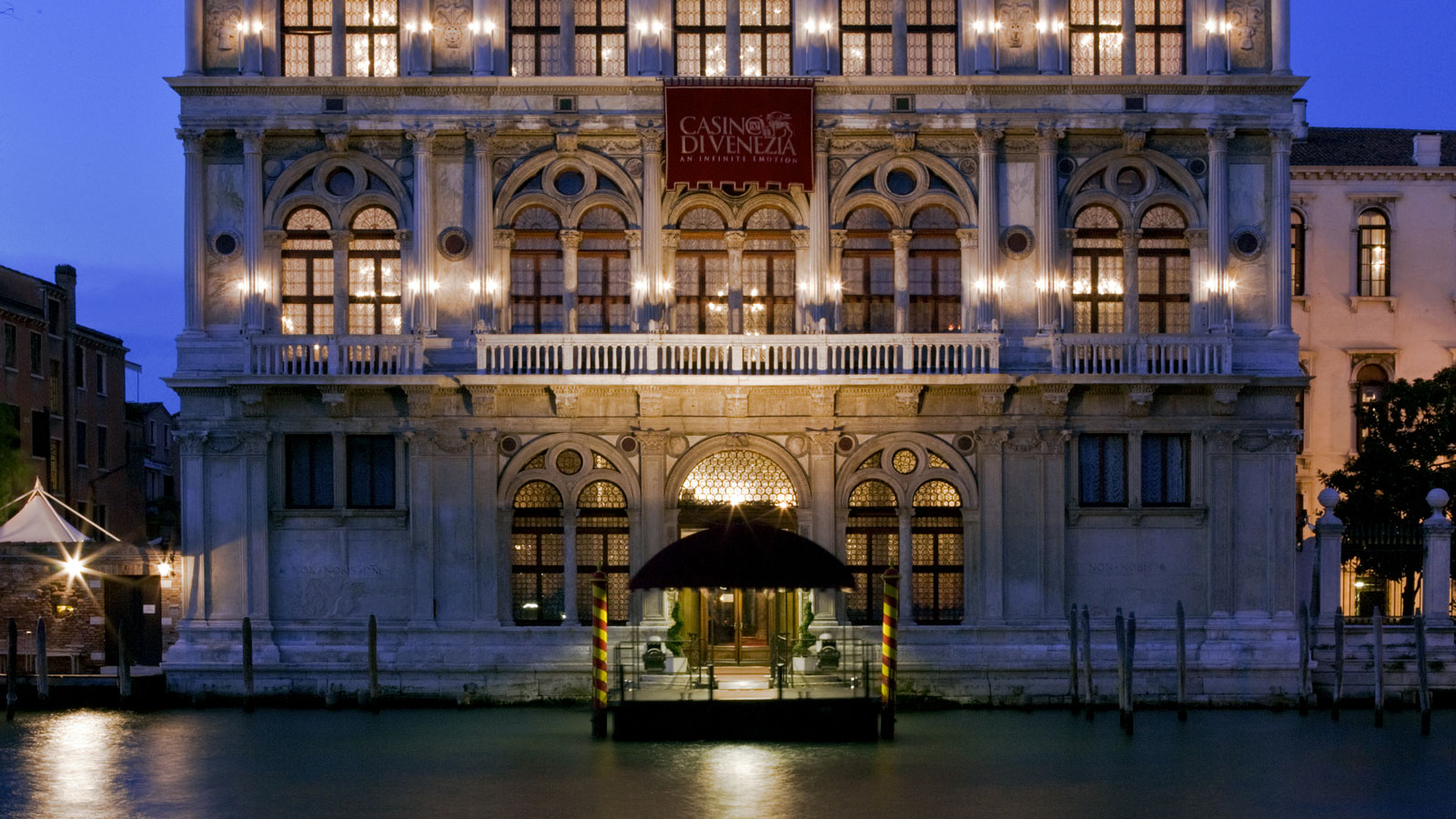

a data di costruzione di Ca' Vendramin Calergi è
incerta, ma gli storici fissano l'inizio dei lavori nel 1481,
quando vennero acquistati i vecchi immobili dell'area
su cui doveva sorgere il nuovo edificio. Secondo le
fonti, il palazzo risultava già ultimato nel 1509,
in un tempo ragionevolmente breve,
se si pensa alle tecnologie dell'epoca
e alla difficoltà di costruire sull'acqua.
La storia di Ca' Vendramin Calergi potrebbe benissimo
riempire le pagine di un romanzo. Il nobile che per
primo legò il suo nome alle fortune dell'edificio fu
Andrea Loredan, potente esponente del patriziato
veneziano, erede di una famiglia che diede alla
Serenissima ben tre Dogi. Fu lui a volerne la
costruzione e a legare la sua storia personale a quella
del palazzo. L’architetto Mauro Codussi ha realizzato la
somma di tutte le sue prove, il più geniale tra i
costruttori del rinascimento lagunare. Nel 1581 la
famiglia Loredan, in difficoltà economiche, fu costretta
a vendere al Duca di Brunswick, uno straniero
innamorato di Venezia, per la somma di 50 mila ducati.
Dopo due anni il palazzo passò ancora di mano e
divenne proprietà di Guglielmo III Gonzaga, marchese
di Mantova, che lo tenne per poco tempo, prima di
cederlo a sua volta a Vittore Calergi, patrizio
veneziano originario dell'isola di Candia. Sotto la sua
proprietà la dimora ebbe un periodo di grande
floridezza, con lavori di ampliamento e la costruzione
della cosiddetta "ala bianca", eretta nel 1614, sopra il
giardino, su progetto di Vincenzo Scamozzi, celebre
architetto del Rinascimento.
el 1739 il palazzo fu ereditato dalla famiglia
Vendramin, legata da parentela con i Calergi che nel
frattempo, grazie a un matrimonio, erano diventati
Calergi-Grimani. L'edificio acquisì così il suo nome
attuale. Gli ultimi eredi dei Vendramin vendettero il
palazzo nel 1844 a Maria Carolina Duchessa di Berry,
personaggio di altissimo lignaggio essendo figlia del
principe ereditario del Regno delle Due Sicilie, nipote
dell’imperatore Leopoldo II Asburgo e sposa del
secondogenito del futuro re di Francia Carlo X . Dopo i
moti del Risorgimento i proprietari furono costretti a
mettere in liquidazione il palazzo e molte opere d'arte
andarono all'asta a Parigi. In seguito alla morte della
Duchessa, Ca' Vendramin Calergi fu co-abitata dal
Conte de’ Bardi e dai Duchi di Grazia, che ospitarono
Richard Wagner nel periodo in cui il grande
compositore tedesco stava lavorando alla stesura del
"Parsifal". Wagner visse nel palazzo dal 1882 al 1883,
anno della sua morte avvenuta il 13 febbraio. Oggi, a
ricordo del musicista, sul muro di cinta che guarda il
Canal Grande è visibile una lapide con le parole
dettate da Gabriele D'Annunzio. Nel 1937 gli ultimi
eredi dei conti Grazia, Lucchesi-Palli lo alienarono
a Giovanni Volpi conte di Misurata che fatti eseguire
alcuni restauri, adibì il primo piano a dimora, ad uso di
rappresentanza e convegni, e il secondo piano a sede
del Centro di Elettrologia. Nel 1946 Ca' Vendramin
Calergi fu ceduta al Comune che ne fece la sede
invernale della Casa da Gioco municipale.
| |
he exact date of the construction of Ca' Vendramin
Calergi is not known, however historians set the start of
work in 1481, with the purchase of old structures in the
area that was to host the new building. According to
historical sources, the palace was completed by 1509, a
relatively short time in view of the technology available
at the time and the difficulties inherent
in building on the water.
The history of Ca' Vendramin Calergi could easily fill the
pages of a novel. The first patrician to be associated
with the fortunes of the building was Andrea Loredan,
an influential figure amongst the Venetian nobility, and
from a family that gave Venice three doges. He had the
palace built and was linked to it at length. Mauro
Codussi was the architect who realised the apex of his
achievement, undoubtedly the most ingenious of all the
early renaissance architecrs in Venice. In 1581, when
the Loredan family ran into financial troubles, the
building was sold for the sum of 50 thousand ducats to
the Duke of Brunswick, who adored Venice. The palace
changed owner once more after only two years, and
became the property of William III Gonzaga, marquis of
Mantua, who in turn passed it on to Vittore Calergi, a
Venetian noble who hailed from the island of Candia.
Under his direction it flourished and underwent
extensions,
ncluding the construction of the so-called "white wing",
erected above the garden in 1614, on a design by
Vincenzo Scamozzi, renowned Renaissance architect.
 n 1739 the palace was inherited by the Vendramin
family, related to the Calergi, who had become the
Calergi-Grimani through wedding ties. Thus the building
acquired its present name. In 1844 the last members of
the Vendramin line sold the palace to the Duchess
Maria Carolina of Berry, a high ranking figure, daughter
of the heir to the throne of the Two Sicilies, niece of the
Hapsburg emperor Leopold II and wife of the second
son of the future king of France Charles X. In the wake
of the unrest of the Risorgimento the owners were
forced to sell off the palace, and many works of art
were auctioned in Paris. Following the death of the
duchess, Ca' Vendramin Calergi became the residence
of the Count de’ Bardi and the Dukes of Grazia who
hosted Richard Wagner at the time the great German
composer was working on Parsifal. Wagner lived in the
palace from 1882 to 1883, the year of his death there,
on 13 February. Today, the wall facing the Grand Canal
bears a memorial plaque to Wagner with a quotation by
Gabriele D'Annunzio. In 1937 the last heirs of the
Grazia counts, Lucchesi-Palli sold it to Giovanni Volpi
count of Misurata who renovated it in part, made an
apartment of the first floor, also to be used for
performances and seminars, while the second floor
became the Centre for Electromagnetic and Electrical
Phenomena. In 1946 Ca' Vendramin Calergi became
the property of the Venice City Council who made it into
the winter venue for the city casino.
|